

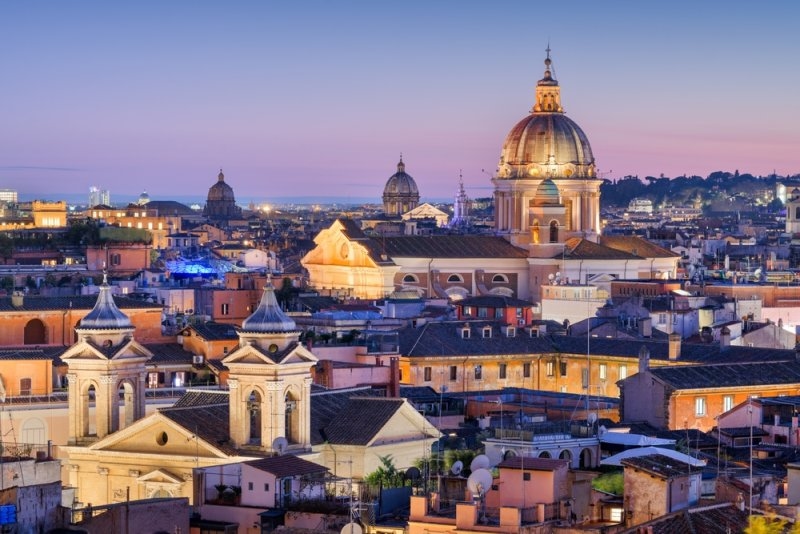
Italians have a unique culture that reveals millions of years of history, local cultures, family values, food, arts, music, and social life. Nowadays, Italian traditions are deeply rooted in daily routines, and at the same time, most of the Italian ancestors' culture can be seen in Architecture, Music, Costume, and festivals.
The Italian lifestyle also places importance on relationships and companionship. Studying Italian customs and cultures gives a more intimate view of what makes Italian people special.
Italy’s culture is derived from the influence of ancient Rome, the Renaissance, the Catholic church, separate kingdoms, and modern artistic movements. This culture can be seen in the historic cities, art galleries and churches, in town squares and in the cultural observances, their style reflecting the past and the present of Italy.
Italian traditions and culture are also intact thanks to the family recipes, local festivals, regional languages, crafts and traditions which are transmitted from generation to generation. Due to the fact that the communities have grown independently for hundreds of years, the Italian traditions may have a great variety between regions. This regional character is one of the most important characteristics of Italian culture.
Family, food, friendship, and community are very important to the Italian way of life. Family members often have a lot of contact with each other through family meals, visits, and celebrations. This helps families of all types - parents, children, grandparents and relatives - to stay close to one another.
Food plays a huge role in Italian culture too. Common staples include pasta, bread, cheese, vegetables, fish, meat, coffee and olive oil. All the foods are used in a variety of ways, with different dishes originating from different parts of Italy. Food plays such an integral part in Italian traditions that we know and eat it to pass time, share stories, and make conversation.
Families are very important to Italians. Whether in a frequent gathering, celebration, or at mealtime, relatives remain in contact and stay close. Grandparents are also a great source of recipes, tales, and traditions.
Contemporary work, studies, travel, and urban living have altered some habits in families. Nevertheless, personal relationships are still significant in most of the Italian cultures. The family traditions and customs are still evolving without losing the link with the previous generations.
The type of Italian food varies considerably from one region to another. North Italian cooking is likely to include rice, polenta, butter, cheese and pork, while Southern Italian cooking is likely to use products such as tomatoes, olives, garlic, vegetables and olive oil. This differs from region to region.
Most traditional recipes are linked to a family or local community. Italian dishes are likely to turn up at festivals, family occasions and special celebrations, ensuring food is part of Italian culture. Traditions continue to keep regional cooking alive.
Coffee is right at home in the Italian way of life. Cappuccino or espresso is more common, or the local cafes can be a meeting place for friends to chat or just relax for a bit. Such simple patterns have made food and drink central to daily social life.
Coffee routines may differ across time, place, and individual taste. But what is culturally significant are the social practices associated with these routines. Small habits practiced on a daily basis can give rise to opportunities for discussion and community building.
The passeggiata, or leisurely walk, is perhaps the most widely recognized of Italian social practices. For example, people can stroll through the town center at dusk, visit with friends, patronize local establishments, or just be outside.
This is about the social side of Italian life. Instead of being just a place you walk through, the places in town can be used to sit and chat, and to have meaningful interactions with other people. The passeggiata is an everyday activity that can take on a cultural significance.
Fashion remains an integral part of contemporary Italian culture and Italian heritage. Italy is renowned for tailoring, leatherware, clothing, accessories, furniture and design. Materials and craftsmanship are central to the ways in which current creative industries are linked to the more traditional practices of artistic craftsmanship.
Some of the Italian habits regarding one's presentation can also be seen as a way of liking to appear sophisticated and put together. Sometimes this can be achieved without the need for overly expensive garments. Basic, good-quality items and a sense of detail can help to develop a discreet style associated with the Italian way of living.
Italy has been greatly impacted by the way Italians have expressed themselves through art and architecture. Today, there are many buildings, churches, museums, sculptures, and old towns that are all part of the period of Italian history they were built in, including ancient Roman, Renaissance art, etc.
Music plays a key role in Italian culture too. Opera, which was developed in Italy, is an influential cultural art form, while painting, sculpture, literature, and design also contribute to the culture. These traditions continue today through museums, theaters, festivals, and artists.
The official language is Italian; however, several regional accents and dialects, together with minority languages, contribute to Italy's cultural diversity. Distinct communities have created separate expressions and vocabularies for their own use, shaped by their own history. Language is an essential element of Italian customs.
Expressiveness in social interactions is also common. Hand gestures, facial expressions, and lively dialogue are all used naturally. Hospitality is a very important facet of Italian culture, often evident in the way visitors are greeted or food is shared. These mundane occurrences are evidence of the fact that Italian culture is more than just the sculptures and the Colosseum.
You can see Italian traditions at their best during these events: Christmas, Easter, the Epiphany, and All Saints' Day. Also, the towns and villages have their own patron saints, celebrated with food, music, religious events, and get-togethers.
Italians also enjoy sharing their culture through local festivals. Customs are taught to the next generation, and many different foods, ceremonies, costumes, and music can be found in different communities.
Italian culture is made up of history, regional culture, family life, cuisine, art, fashion, language, and social life. While this culture is still observed in traditions and lifestyles, the culture is also evident in many buildings, music, food, and work.
Living the Italian way is all about people, relationships, and the time you have, though different areas of Italy will have different customs. These various cultures combine to make one happy, diverse nation.
Italian culture is known for cuisine, art, architecture, fashion, music, family values, and historic heritage. It has strong regional traditions and local pride in each region's own traditions, food, festivals, language, customs, and crafts.
Some famous Italian traditions include meals eaten together by family, holidays, festivals, regional foods, the passeggiata, and community festivities. These are occasions in which families are able to continue relations through meeting up and spending time together as a family and the community.
Regional Italian traditions are due to its long history of independent regions and communities. This has led to a diverse range of traditions in the Italian language, festivals, architecture, and cuisine, among other things.
Italian heritage is known for food in a number of ways. Its traditions and recipes have a strong link with family, as meals are seen as a time for the family to meet up and spend time together. Traditional recipes, although varying within regions, still have a link to Italy as a culture.
The modern shape of life influenced by Italian tradition and heritage is seen today in Italian cuisine, style, architecture, designs, Italian music, and craftsmanship, among other things. Italians continue to base their way of life around family traditions, festivals, Italian food, and regional cultures.
This content was created by AI